


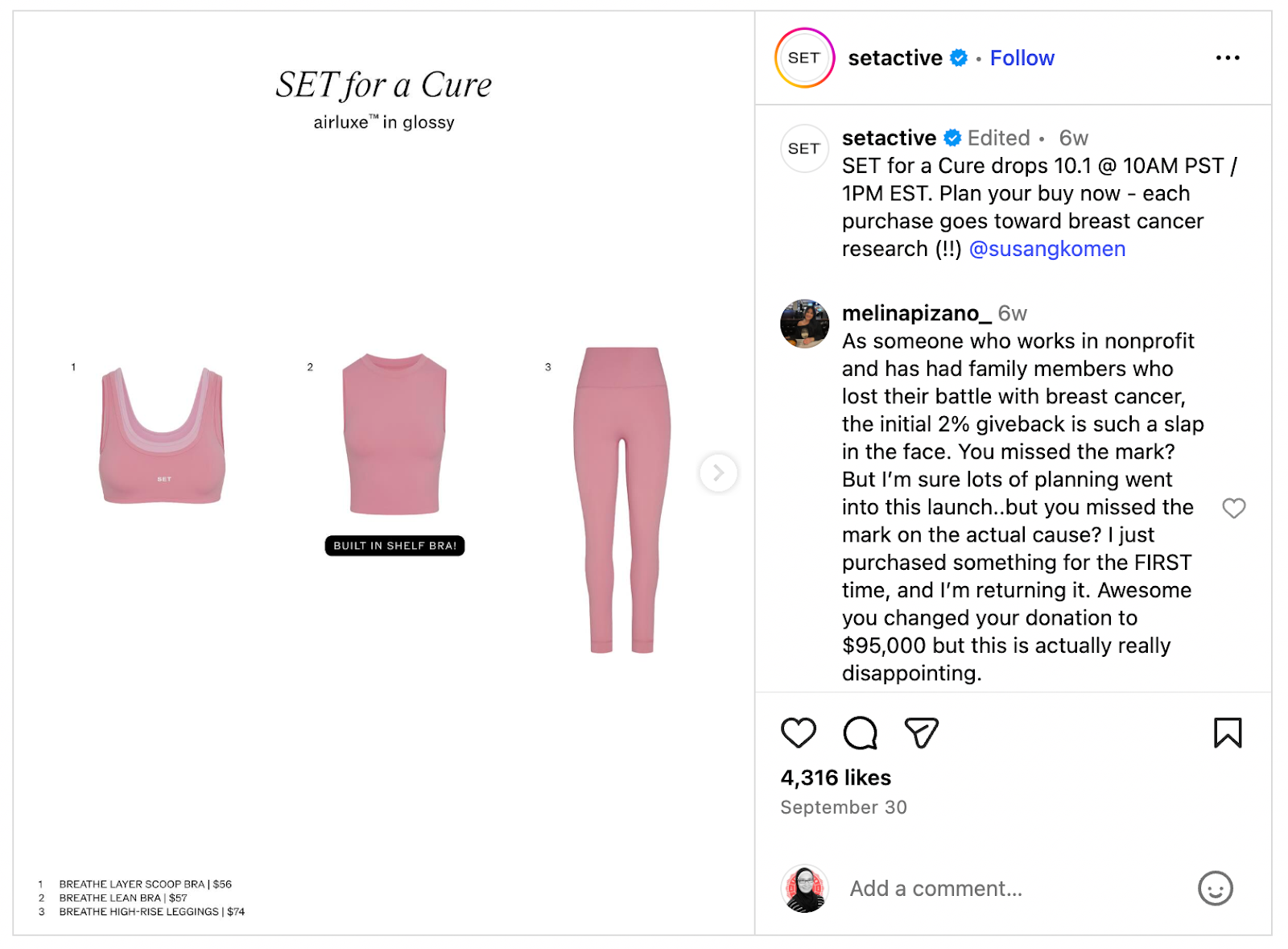
I love purpose-driven work. I also know how fast it can go wrong.
Set Active launched a Breast Cancer Awareness drop with a line that sounded perfect for Instagram: “every purchase goes toward breast cancer research.” Then comments discovered the pledge was 2%. Backlash hit. The brand raised it to 20% with a higher cap. Some customers still felt used.
This is not a hit piece. It is a pattern I see every October and a lesson every founder should learn:
In cause marketing, clarity beats intention. People read the fine print. Then they share it.
As a brand strategist and designer, here is the simple truth: if your campaign makes people feel seen, it spreads. If it makes people feel sold to, it burns.
Below is the playbook I use with clients so you can support real causes and still run a healthy business.
The “CARE” Checklist for Cause Campaigns
C — Concrete math
Tell people the exact numbers. Example: “We donate 20% of gross sales from this collection, up to $95,000.”
Include the baseline scenario: “If we sell 5,000 units at $60, that funds X mammograms.”
A — Aligned partner
Pick a nonprofit your audience already trusts. Name them early. Link to their page. Let them speak on your launch assets.
R — Real outcomes
Translate money into impact. Money feels abstract. Outcomes feel human. “$150 funds one screening.” “$40 covers a care kit.”
E — Earned consent
Talk to the community you want to help before you ship. Survivors, caregivers, medical pros. Ask:
- What language feels respectful?
- What triggers should we avoid?
- What would be meaningful besides money?
What to Say. What Not to Say.
Say this:
- “Here is the exact percentage and cap.”
- “Here is the nonprofit and why we chose them.”
- “Here is how your purchase becomes care on the ground.”
- “Here is our reporting date and where we will publish receipts.”
Avoid this:
- Vague lines like “a portion of proceeds.”
- Lifestyle gloss that treats illness like an aesthetic.
- Defensive replies about margins in the comments.
- Silence after backlash. Silence reads as indifference.
If You Cannot Pledge a Big Percentage
You can still create real value:
- Education pack: Self-exam guide, warning signs, questions for your doctor.
- Access map: A simple page of screening clinics by city.
- Volunteer day: Close the studio for a day and send staff to pack care kits.
- In-kind support: Give products directly to patients or caregivers through your partner.
- Platform lift: Turn your channels over to survivor stories and nonprofit experts.
Be honest about limits: “We are a small team. This is what we can commit to right now. Here is how we will report it.”
What to Do When the Internet Turns on You
If people call you out:
- Acknowledge fast. “You’re right. We were unclear.”
- Correct the copy. Get the math and wording live.
- Publish receipts. Date, amount, transaction ID.
- Keep the tone human. No legalese. No excuses.
- Debrief publicly. What you learned and what you will do next time.
The internet forgives imperfect action. It does not forgive spin.
Why This Matters More Than Ever
Younger audiences are trained to spot vague promises. They want specific, verifiable impact. They also want care that feels human. In other words:
People do not just buy a product. They buy proof that you mean what you say.
Good branding is not about looking bigger. It is about feeling closer. That is how you turn pink from a mood into measurable care.
My Letter to Founders
If you are nervous to launch a cause campaign, that already shows you care. Keep the math simple, the language human, the reporting public, and the community at the center.
You will make better work. You will make fewer apologies. Most important, you will make a difference that outlives the campaign.

Peace,
Pik
Kung Pik Liu • Founder of Design Angel
LinkedIn • Instagram • YouTube
Not sure what I do?
We help women entrepreneurs build brands as ambitious as they are—think brand strategy, brand identity, and marketing creatives. We do it all!
Want to see our work? Check it out!

