
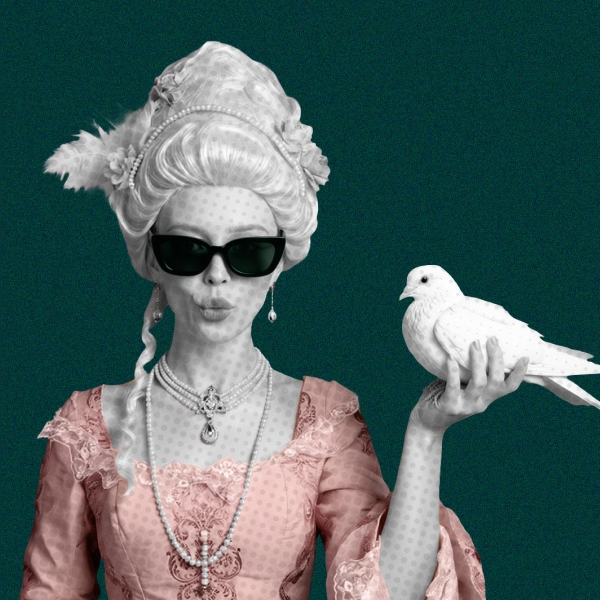

Dearest gentle reader, let’s be honest: if you’ve ever built a business as a woman, you already know the “Ton.” You know the side comments. The unsolicited opinions. The people who watch from a distance and still feel qualified to critique your pricing, your voice, your confidence, your visibility. In Bridgerton, that chatter happens in ballrooms. In 2026, it happens in comment sections, group chats, and passive-aggressive “advice” from people who have never built what you’re building.
That’s why I couldn’t stop thinking about Dove’s new campaign with Netflix and Shondaland, inspired by Bridgerton. The campaign is called “Let Them Talk,” and the whole concept is basically a reminder that “uninvited opinions” do not get to run your life, or your brand.
There’s one moment in particular that hit me right in the founder gut: a creator with alopecia removes her wig in the middle of the ball. In a setting built on masks, she chooses visibility anyway. And to me, that’s not only a “beauty” moment. That’s leadership. That’s the decision so many women consultants have to make again and again: do I keep performing “polished” so nobody can criticize me, or do I show the real work and let the right clients connect with the truth?
So in this blog, I want to pull the business lesson out of the campaign and make it practical for you. If you’re a woman consultant trying to lead, sell, and stay visible in public, “Let Them Talk” is more than a tagline. It’s a strategy for resilience. It’s the mindset that keeps you from shrinking every time the internet clears its throat.
The Ton never stops talking, and neither does the internet
If you’ve watched Bridgerton, you already get the social math. The Ton decides what’s “acceptable” based on whispers, glances, and who’s brave enough to show up anyway. Dove’s “Let Them Talk” campaign nails that parallel by setting the hero video at a masquerade ball, literally surrounding the characters with masked chatter, then interrupting it with people who walk in fully owning who they are. That’s the point. The noise doesn’t disappear. The power move is staying visible in the middle of it.
Now translate that into business, especially if you’re a woman consultant building in public. Your “Ton” is the comment section. It’s the LinkedIn peanut gallery. It’s the competitor who watches your launches like a hawk. It’s the client who wants “strategy” but flinches the moment you sound certain. Uninvited opinions show up everywhere, and they rarely announce themselves as insecurity. They show up as “helpful suggestions,” price pushback, tone policing, and that subtle pressure to soften what you really mean.
This is why “Let Them Talk” lands as a leadership mantra. The campaign voiceover literally frames the question of letting criticism dull your sparkle, then answers it with confidence. When you’re building an agency or a consulting practice, you don’t need to win over every observer. You need clarity so strong that the right people can feel it fast, and enough resilience to keep posting, selling, and leading even when the whispers start.
This is where most collaborations fall apart. A lot of brands treat partnerships like a shortcut to attention: slap two logos together, borrow an aesthetic, and call it a day. The result is almost always the same: one audience feels pandered to, the other feels confused, and the brand loses a little trust in the process.
Dove had even more at stake because their audience isn’t just buying soap. They’re buying into a belief system. When you have a strong purpose platform, people notice instantly if you dilute it for trend value.
And Bridgerton fans are not casual. They’re emotionally invested. They care about details. They can tell when something is “in the world” versus just costume play. So Dove was balancing two passionate audiences at the same time: Dove loyalists who expect integrity, and Bridgerton viewers who expect the romance and the Regency flair to feel earned. That’s a high-wire act, not a cute brand moment.
So yes, the limited-edition collection is a fun layer, and it’s very on-theme with the four scents and the whole “transport you to the ton” promise. But the real reason I’m writing about this is the strategy underneath. Dove didn’t win by copying Bridgerton’s look. They won by finding a shared human tension that exists in both worlds: the pressure of being watched, judged, and discussed. That’s the risk in one line, and it’s also the opportunity.
The wig moment was a masterclass in “take the mask off” branding
The scene that stayed with me happens right in the middle of the masquerade ball: Chiara Rose, a creator with alopecia, removes her wig and reveals her bald head. It’s bold, simple, and emotionally clean. In a room where everyone is literally hiding behind masks, she does the opposite. She makes herself easier to see. And that one choice carries the whole message of the campaign without needing a speech.
As a founder, I see this as a metaphor for how we show up in business. A lot of women consultants build a “polished” front to protect themselves. They keep their work vague, their opinions soft, and their messaging general because it feels safer. But that safety comes with a cost: if people can’t clearly see you, they also can’t clearly trust you. Clients do not connect to perfection. They connect to clarity. They connect to conviction. They connect to the real thinking behind the work.
This is the part many people misunderstand about transparency. Taking the mask off does not mean oversharing your personal life or posting raw feelings every day. It means letting your audience see what you actually stand for and how you actually think. Show the decisions you make. Explain the tradeoffs. Share the “why” behind your approach. When you do that, you stop competing on aesthetics and start competing on authority.
Dove’s team had a real challenge here too: they needed the campaign to feel authentic to Dove’s long-running Real Beauty platform, while also fitting inside the high-production world of Bridgerton. They solved it by grounding the spot in real people who live the message, not actors pretending to. That’s a smart reminder for consultants: your brand does not need more polish. Your brand needs more truth that your right clients can recognize in seconds.
“Let them talk” tactics for women consultants
If you take one thing from Dove’s campaign, let it be this: the whispering doesn’t stop. The Ton will keep talking, the internet will keep typing, and someone will always have a take. Dove built “Let Them Talk” around that exact reality and staged it inside a masquerade ball full of masked chatter. Then they disrupted the room with people who show up confidently and unedited.
So how do you translate that into your consulting brand without turning it into a motivational poster? You build a brand that doesn’t flinch. That means you get intentional about your voice, your proof, and your response patterns before the opinions arrive.
Tactic A: Build a “No Flinch” brand voice
A lot of women consultants soften their message to avoid being misunderstood. Totally human. But the tradeoff is steep: if you sound uncertain, clients will treat your work like it’s negotiable. Your fix is not “be louder.” Your fix is “be clearer.” Say what you do, who it’s for, and what you believe without padding every sentence with disclaimers. The goal is calm certainty, not performative confidence.
A quick self-check: if your website or LinkedIn reads like you’re trying to be agreeable to everyone, tighten it. Specific language attracts better-fit clients. General language attracts more questions, more skepticism, and more “Can you just…” energy.
Tactic B: Price like you have receipts
You can’t “confidence” your way out of weak proof. When people question your price, they’re rarely questioning your personality. They’re questioning the gap between what you promise and what they can clearly see you deliver.
Borrow what Dove did in storytelling form: they didn’t only state a message about real beauty, they showed it through real people and a bold, memorable moment. Your version is simpler: one strong proof point per offer. A short case snapshot. A before-and-after. A clear metric. A quick “here’s what changed.” Your proof does not need to be dramatic, but it needs to be concrete.
Tactic C: Pre-write your “criticism script”
Founders burn out when they respond to every opinion in real time. Don’t do that. Decide ahead of time how you handle pushback, shade, or bad-faith comments, and keep it boring. You’re protecting your energy and your positioning.
Here are three scripts that work because they’re neutral and firm:
- “Thanks for sharing. This is how I work and who it’s for.”
- “That’s a valid preference. My clients hire me because I’m not doing it that way.”
- “I’m not the right fit for everyone, and that’s okay.”
The point of a script is not to win. It’s to stay in control of your brand presence. Dove’s whole idea is that confidence continues even while society whispers. Your business needs that same backbone.
Let them talk. You’re busy building.
What Dove did with “Let Them Talk” is a reminder I think every woman consultant needs to hear on repeat: the chatter is not a signal to hide. The setting is literally a masquerade ball full of whisperers, and the campaign’s answer is not to argue with them. It’s to show up unedited, stay visible, and let confidence lead the scene. That’s the leadership lesson. You do not need to silence the room to be powerful in it.
So here’s my gentle challenge: pick one small way to take the mask off this week.
- Tighten your positioning into a single specific sentence.
- Publish a short proof post with real details.
- Add one boundary to your onboarding that protects your time and your results.
The Ton can keep whispering. You’re building something real, and real always breaks through
If you’re reading this like, “Okay… this is me,” and you’re a woman consultant who wants to spot where your brand is quietly leaking trust (plus fix it in the next 30 days), send me “TRUST.” I’ll send you my free Brand Trust Kit: a 7-minute scorecard + a 30-day fix plan + copy and LinkedIn banner templates.

Peace,
Pik
Kung Pik Liu • Founder of Design Angel
LinkedIn • Instagram • YouTube
Not sure what I do?
We help women entrepreneurs build brands as ambitious as they are—think brand strategy, brand identity, and marketing creatives. We do it all!
Want to see our work? Check it out!

